Models
Metadata objects are organized and managed within models. Models contain collections as well as other elements, depending on the specific model type:
| Icon | Model type | Description |
|---|---|---|
 | Business data model | A business data model represents a business view of data. |
 | Data catalog | A data catalog describes usage and distribution of data. |
 | Data domain model | A data domain model describes domain-specific data types used in business data models. |
 | Data model | A data model represents a technical view of data. |
 | Measures catalog | A measures catalog describes calculated key figures. |
 | Processing directory | A processing directory documents processings and processes and their usage of data. |
 | Project directory | A project directory documents projects and their usage of data. |
 | Quality model | A quality model documents data quality indicators and their associated measurements. |
 | Reference data model | A reference data model defines reference objects and reference values used in business data models. |
 | System catalog | A system catalog documents systems relevant to data processing. |
Only users with the access level Administrator are authorized to create or delete models.
The governance information can also be edited by users with the access level Editor, provided they are responsible for the model.
Add models
Models are specified in the subpanel of the tenant.
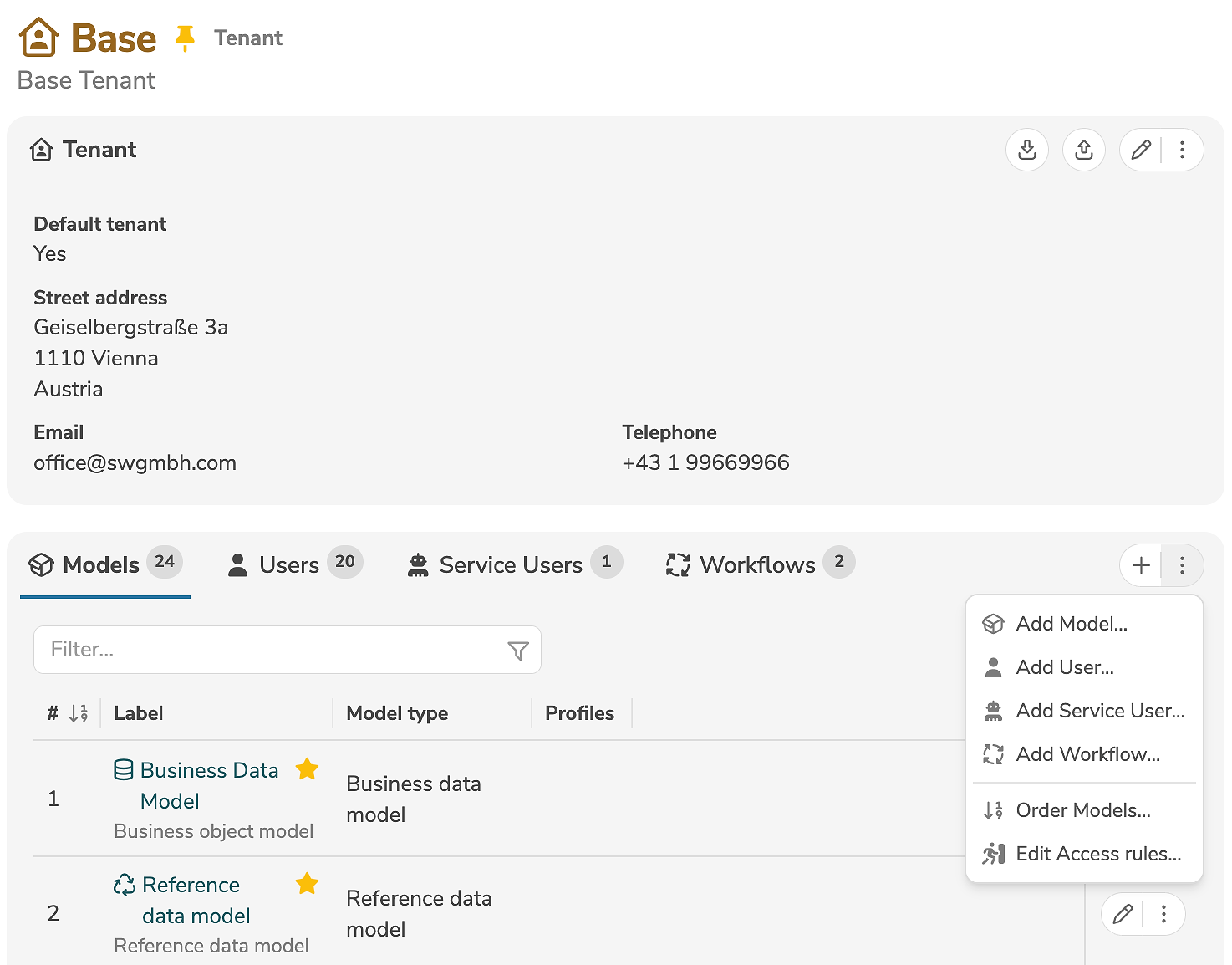
A new model is added by clicking the tab "Models" and the icon "+" (or by selecting "Add Model..." in the menu).
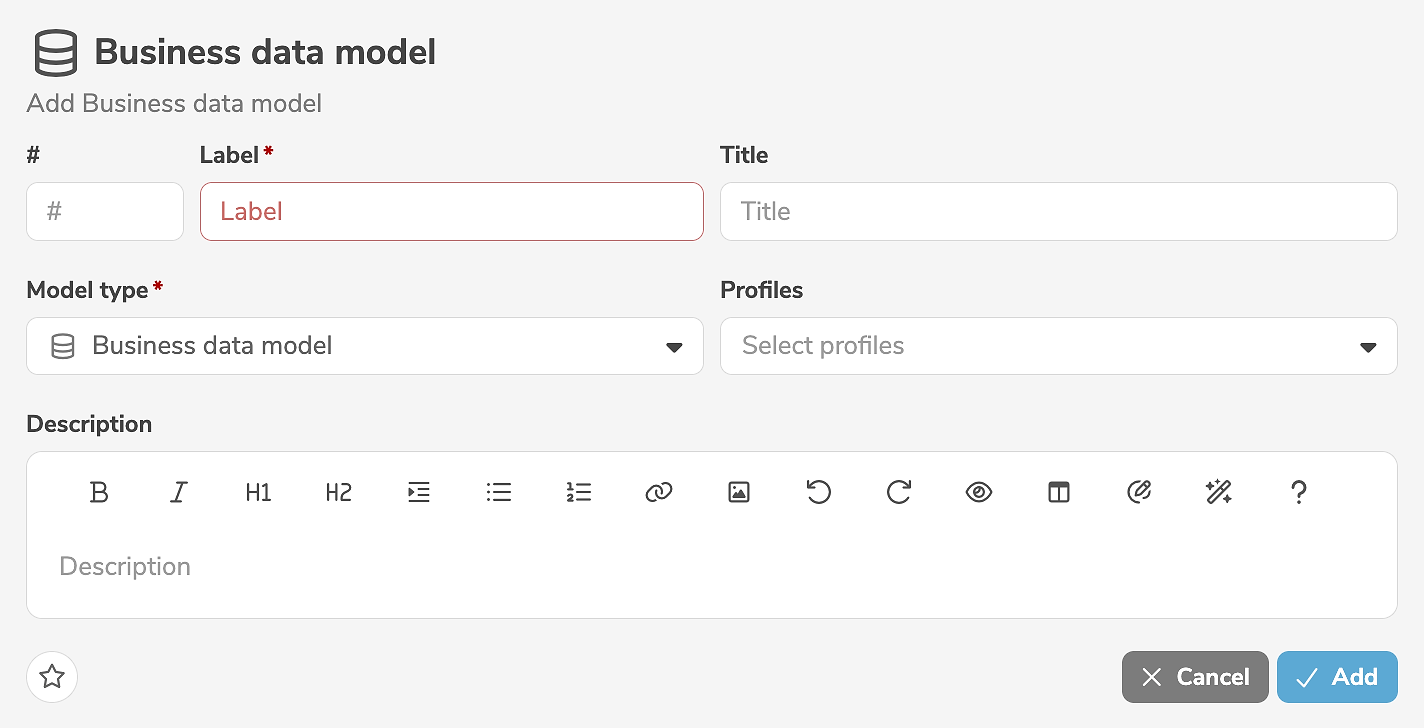
It is mandatory to assign a label and a model type to the model. In addition, an order, a title and a description can be specified. The model can be configured by selecting standard profiles and tenant profiles, if required.
By selecting profiles, a model can be configured for a specific application area.
For example, by assigning the standard profile database to the model, all database specific stereotypes are made available in the model.
Clicking "Add" creates the model.
Edit models
Quick edit
A model is edited in the subpanel of the tenant, by clicking the edit icon (or by selecting "Edit Model" in the menu) next to the model.
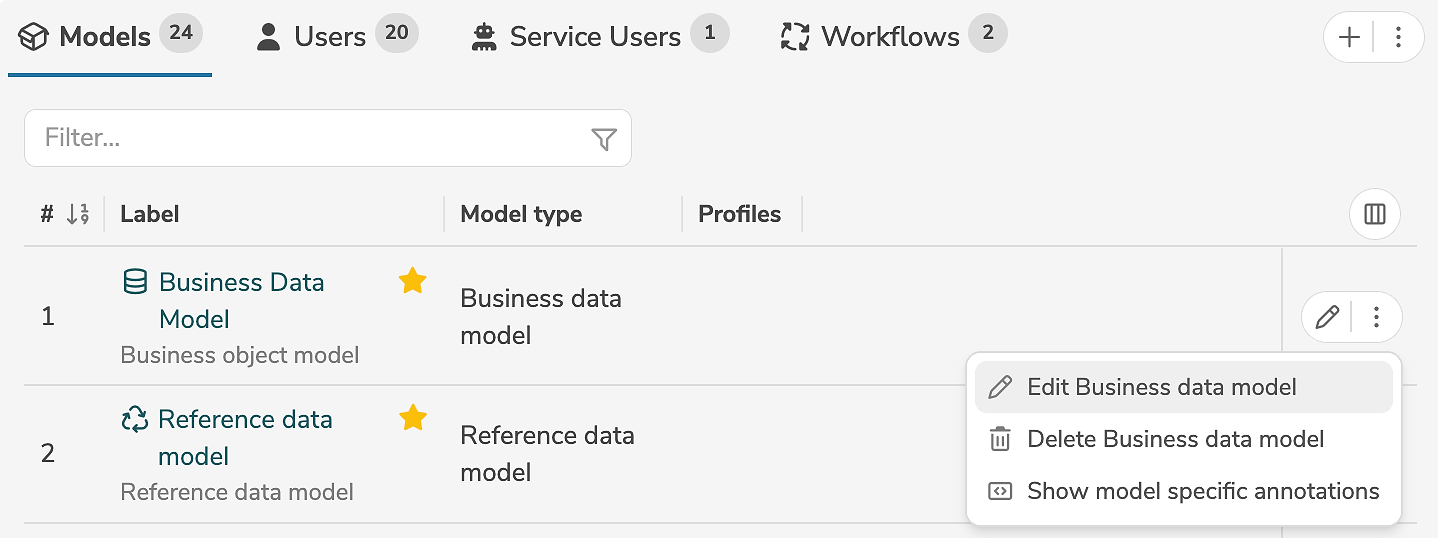
The quick edit mode allows the modification of the most frequently used input fields.
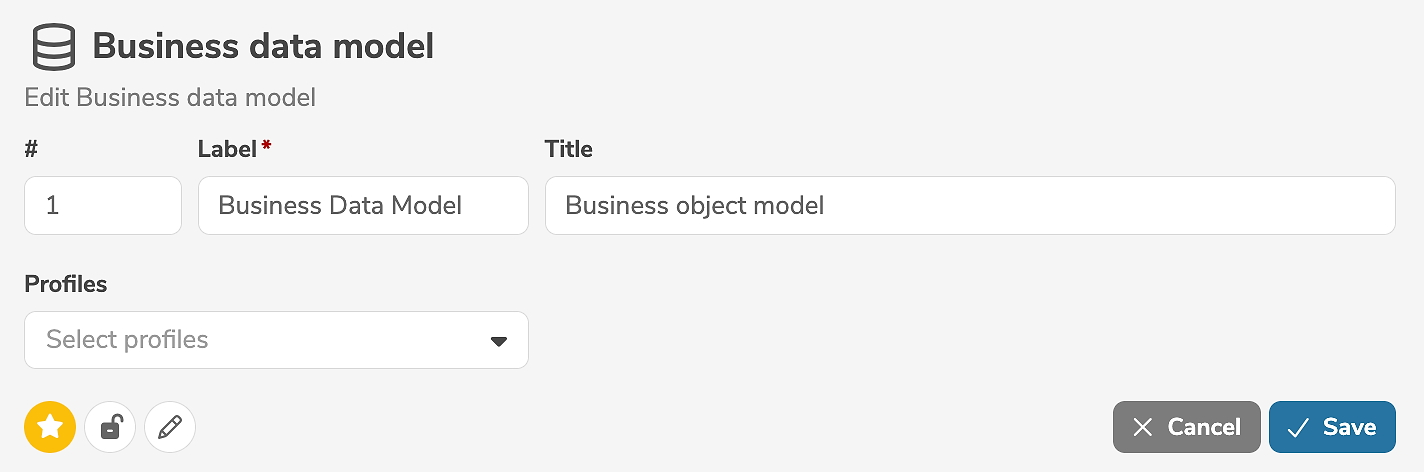
The icons in the lower left corner of the edit view allow further settings to be made:
- Clicking
 marks the element as favorite.
 - Clicking
 marks the element as locked.
 - Clicking
 marks the element as read-only.
Clicking "Save" applies the changes.
A model can be deleted in the subpanel of the tenant, by selecting "Delete Model" in the menu next to the model.
Detailed edit
A model is edited in the main panel of the model, by clicking the edit icon (or by selecting "Edit Model" in the menu).
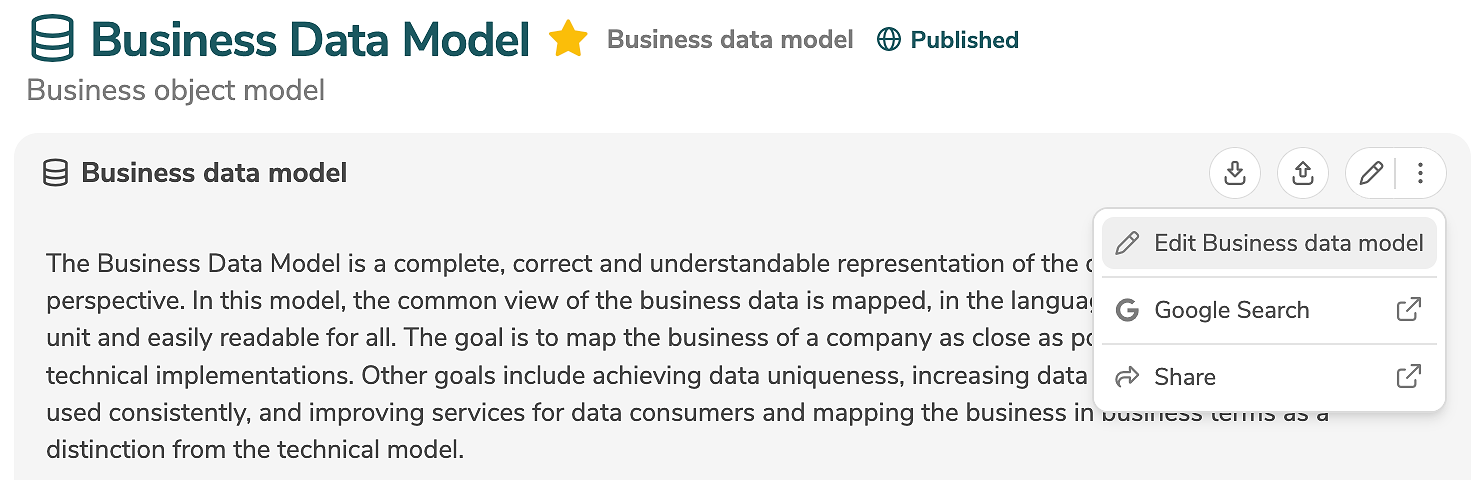
The detailed edit mode allows the modification of all standard input fields. Additional, customer-specific fields can be added using annotations and will then also appear in the edit mode.
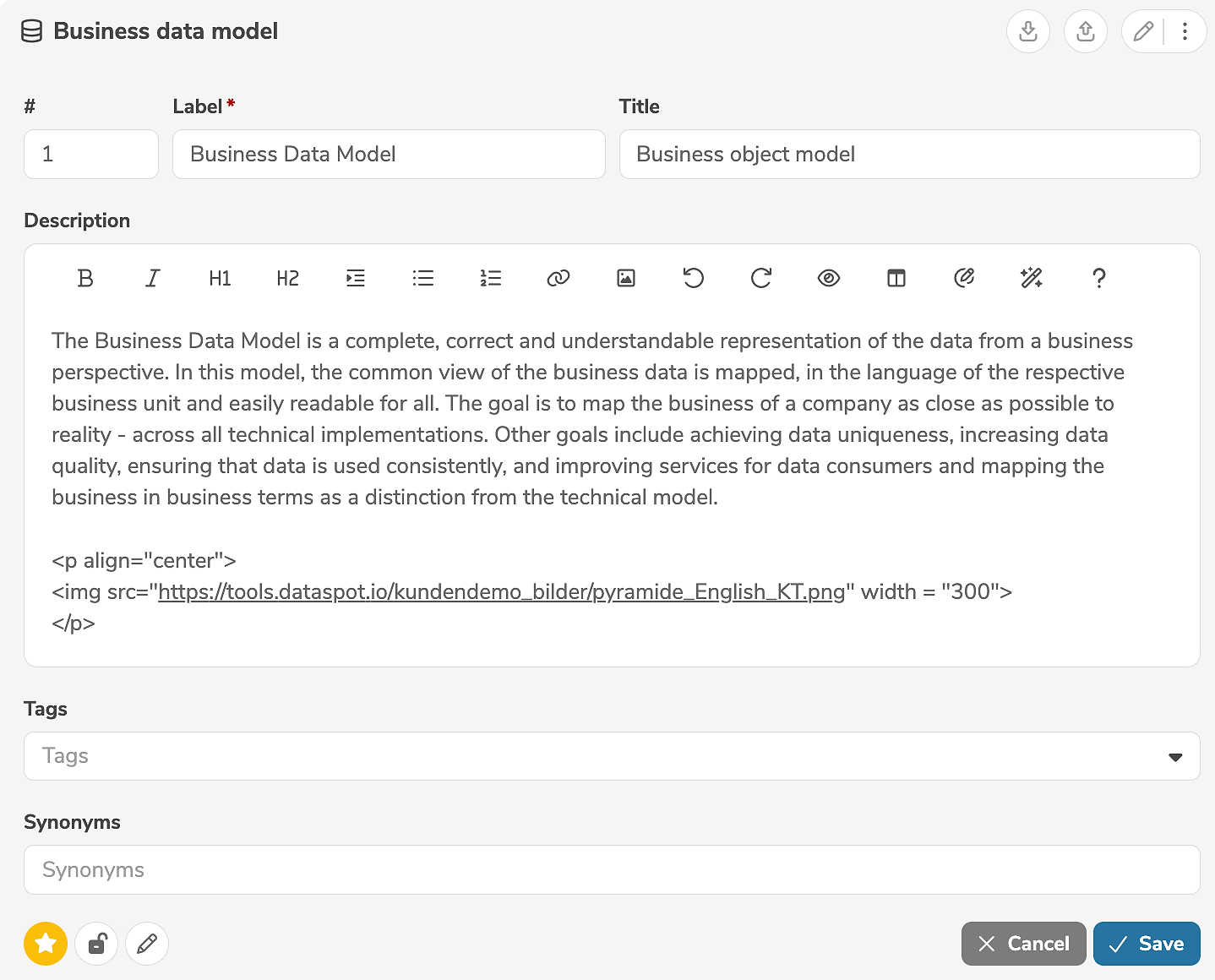
The icons in the lower left corner of the edit view allow further settings to be made:
- Clicking marks the element as favorite.
- Clicking marks the element as locked.
- Clicking marks the element as read-only.
Clicking "Save" applies the changes.
A model cannot be deleted in the main panel of the model, only in the subpanel of the tenant.
Order models
The sorting of the models is determined by their order (if present). This order can be assigned manually during editing. Alternatively, in the subpanel of the tenant, it is possible to arrange the models and assign their order automatically.
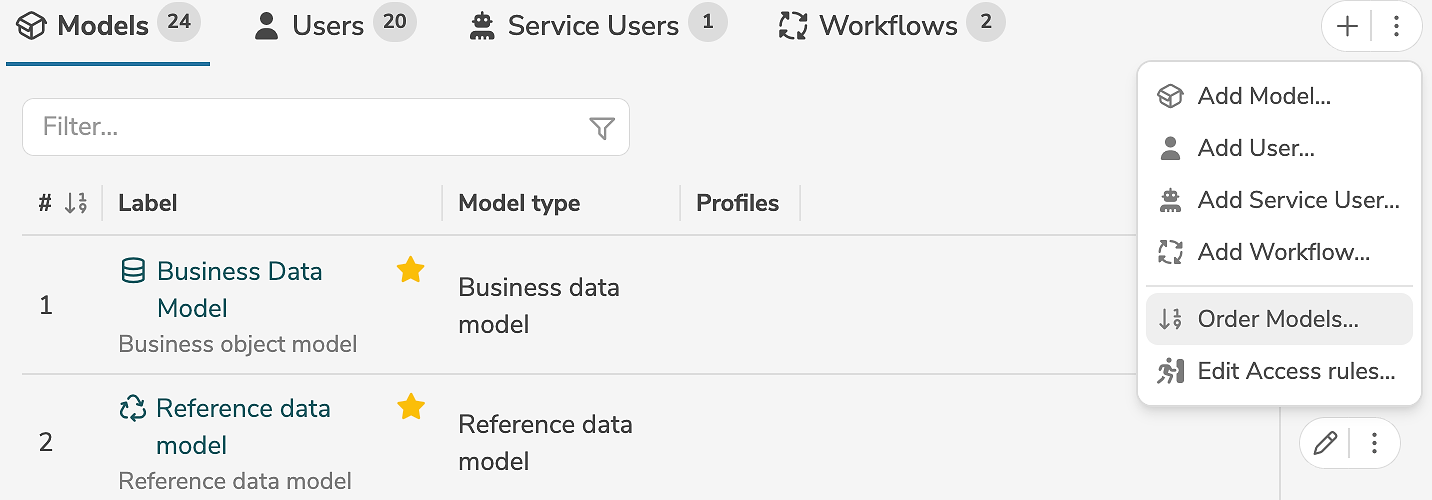
Selecting "Order Models..." in the menu opens a dialog, where the models can be rearranged with the mouse using "drag and drop".
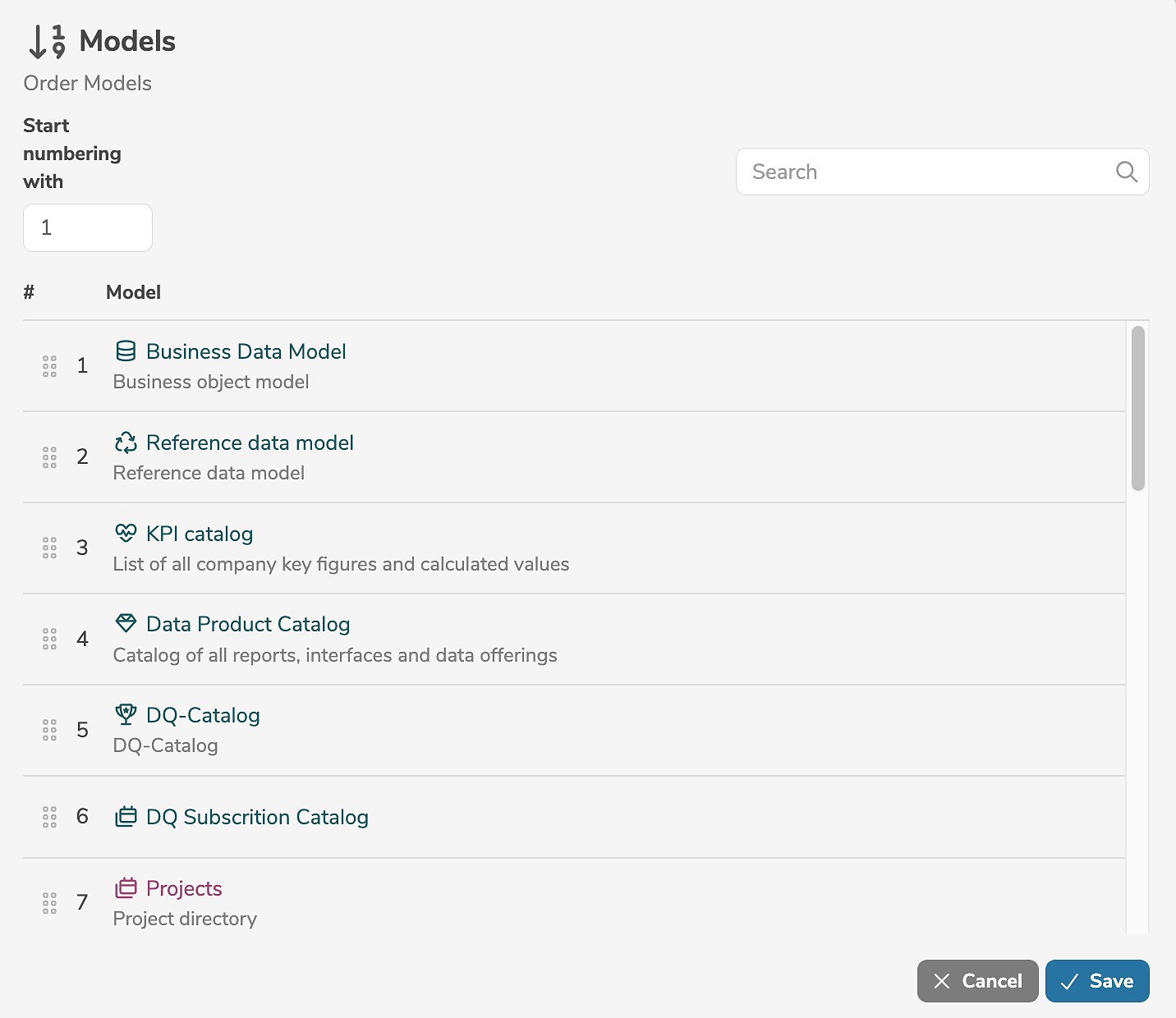
Clicking "Save" applies the changes and reassigns the order automatically.
If required, it is possible to specify that automatic ordering should start at a certain number.
The sorting of the models in the sidebar is determined by the model order.
Model specific annotations
The annotations available in the model are derived by applying the following annotations and profiles:
- The standard annotations of the application
- The tenant annotations of the tenant in which the model is located
- All standard profiles and tenant profiles that are assigned to the model
Tenant annotations can override the configuration of the standard annotations. Standard profiles and tenant profiles can override the configurations of the standard annotations and tenant annotations. Profiles are applied in the order in which they are assigned, i.e. the last assigned profiles may override the configurations of the previous profiles.
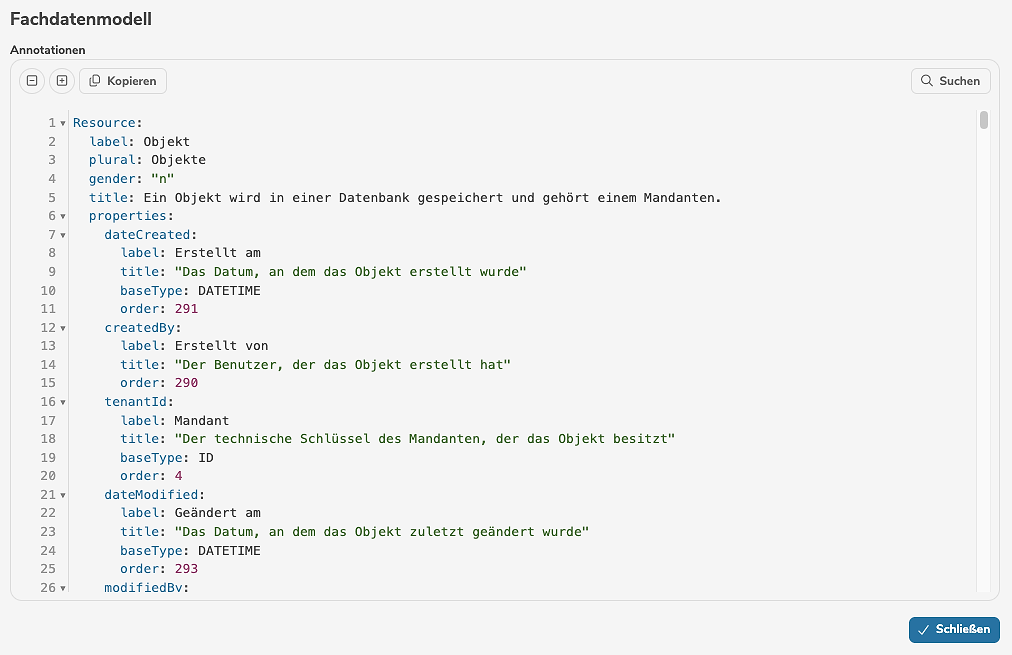
The model specific annotations can be opened in the subpanel of the tenant, by selecting "Show model specific annotations" in the menu next to the model.