Datasets
Datasets represent the uses of data in the enterprise and show the content and purpose of a specific data use. Data uses can be applied in the context of interfaces, reports, dashboards, data marts, etc. A dataset can contain subdatasets to structure large datasets.
The components (as references to other elements) are defined in the dataset.
Add datasets
Datasets are specified in a data catalog in the subpanel of a collection.
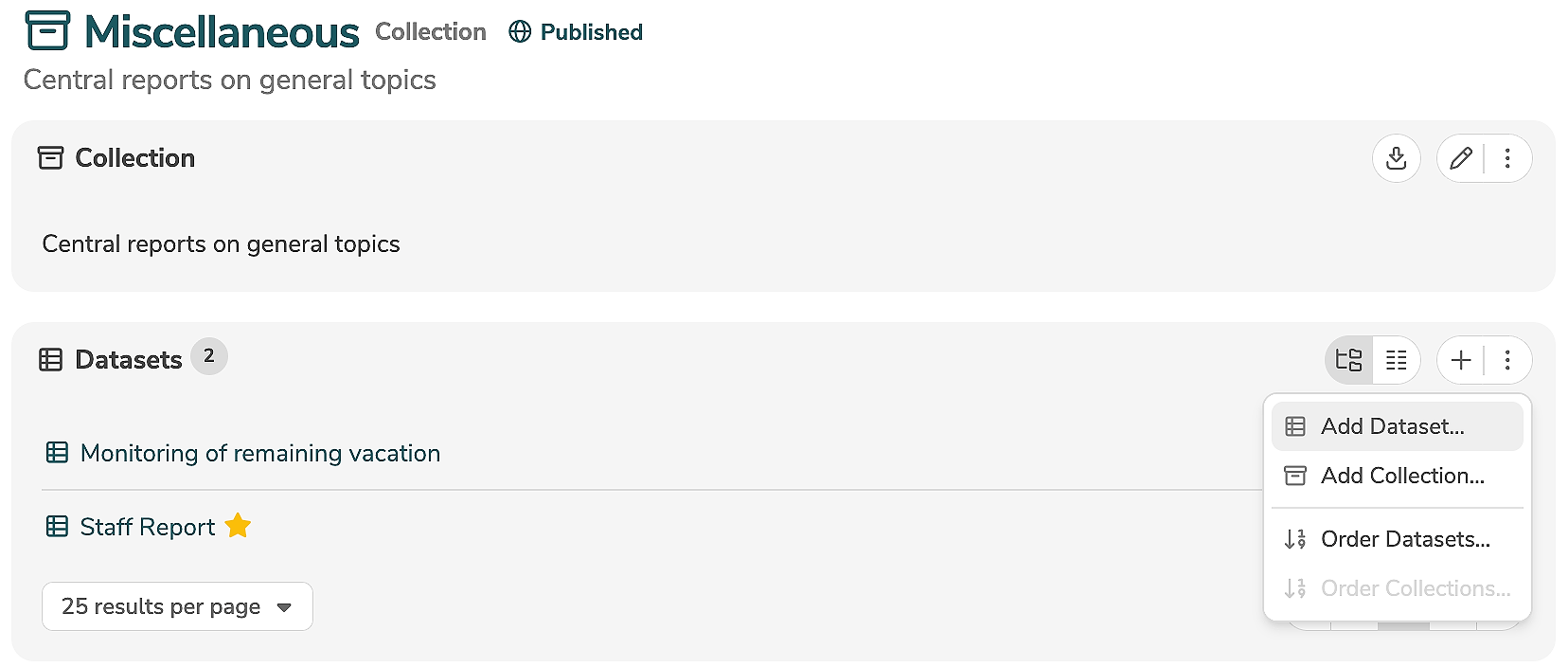
A new dataset is added by clicking the icon "+" (or by selecting "Add Dataset..." in the menu).
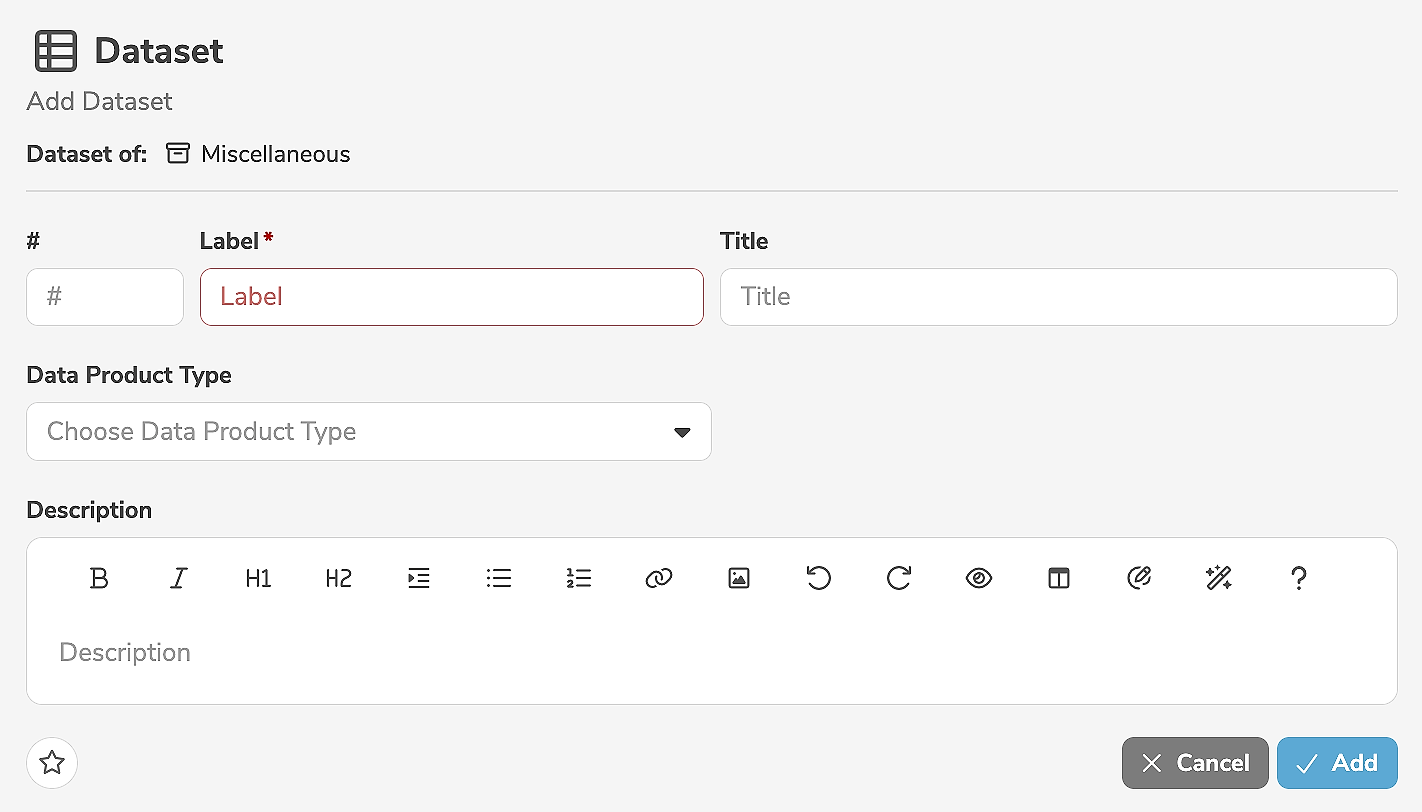
It is mandatory to assign a label to the dataset. In addition, a title and a description can be specified.
Clicking "Add" creates the dataset.
Datasets can also be created by duplicating other datasets.
Edit datasets
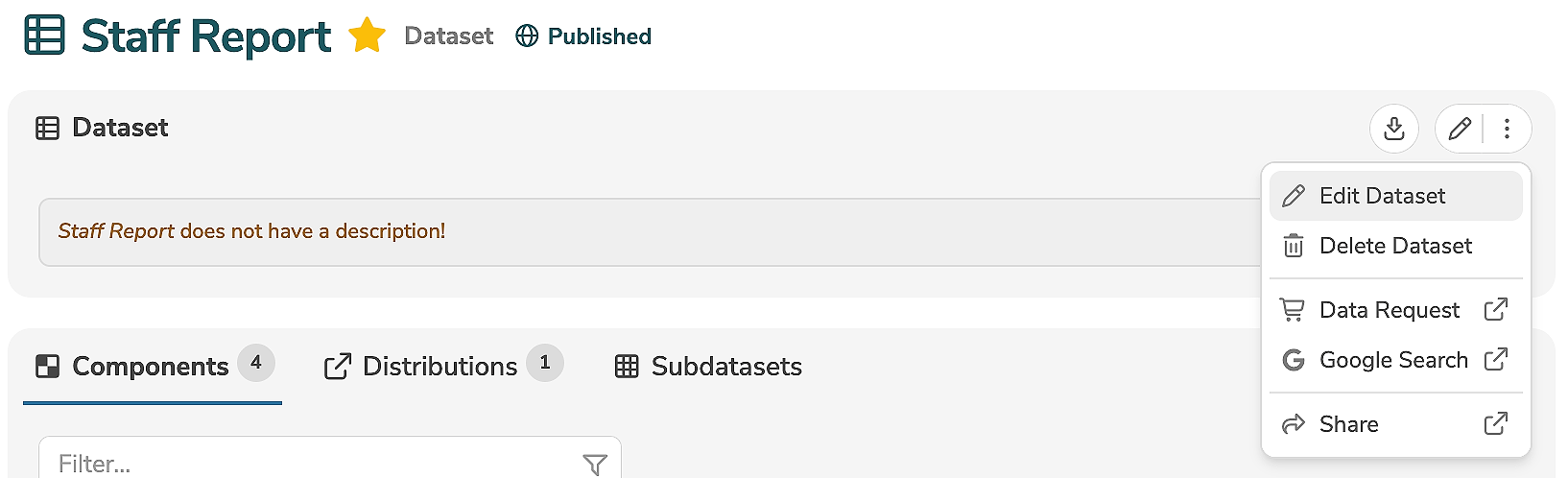
A dataset is edited in the main panel of the dataset, by clicking the edit icon (or by selecting "Edit Dataset" in the menu).
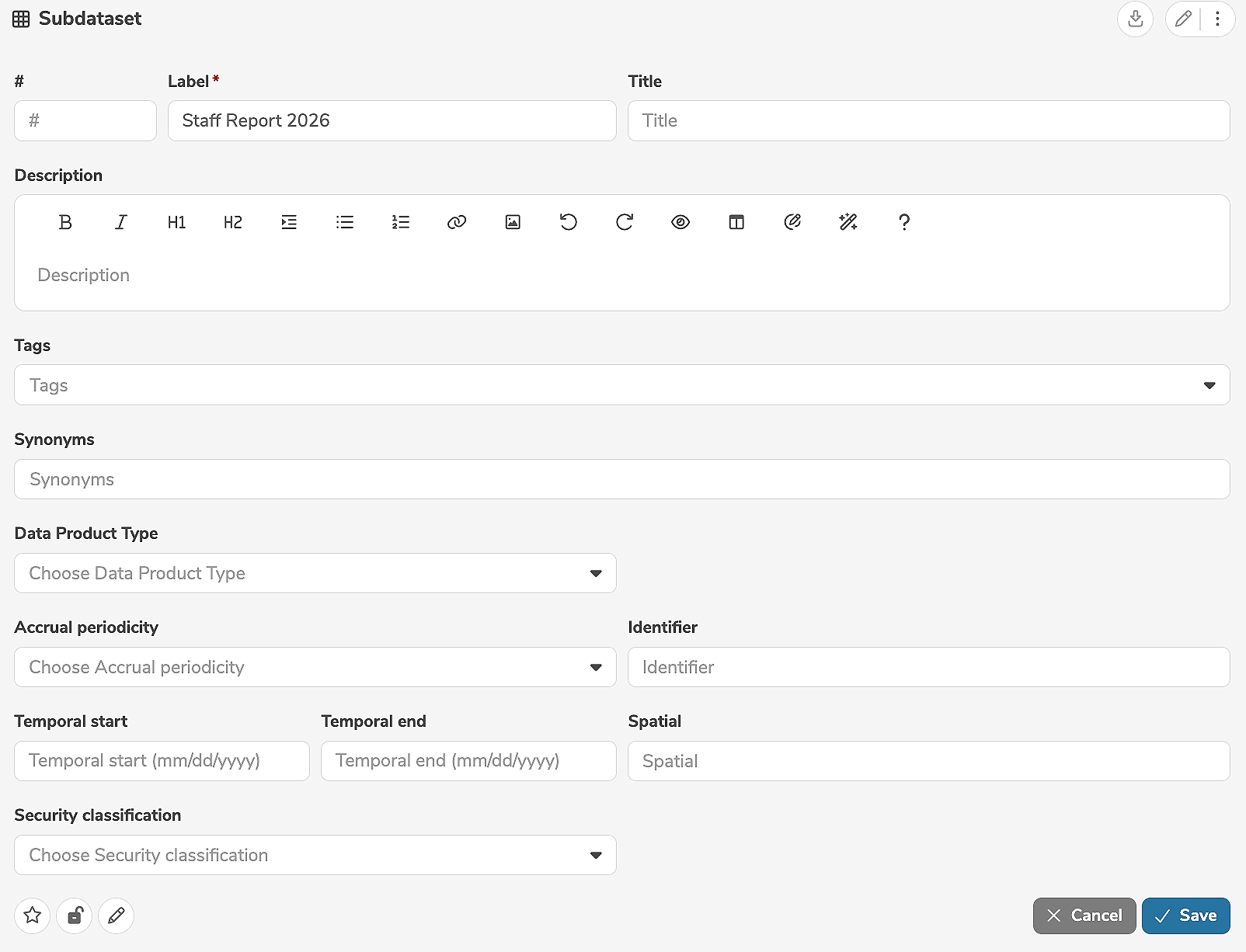
The edit mode allows the modification of all standard input fields. Additional, customer-specific fields can be added using annotations and will then also appear in the edit mode.
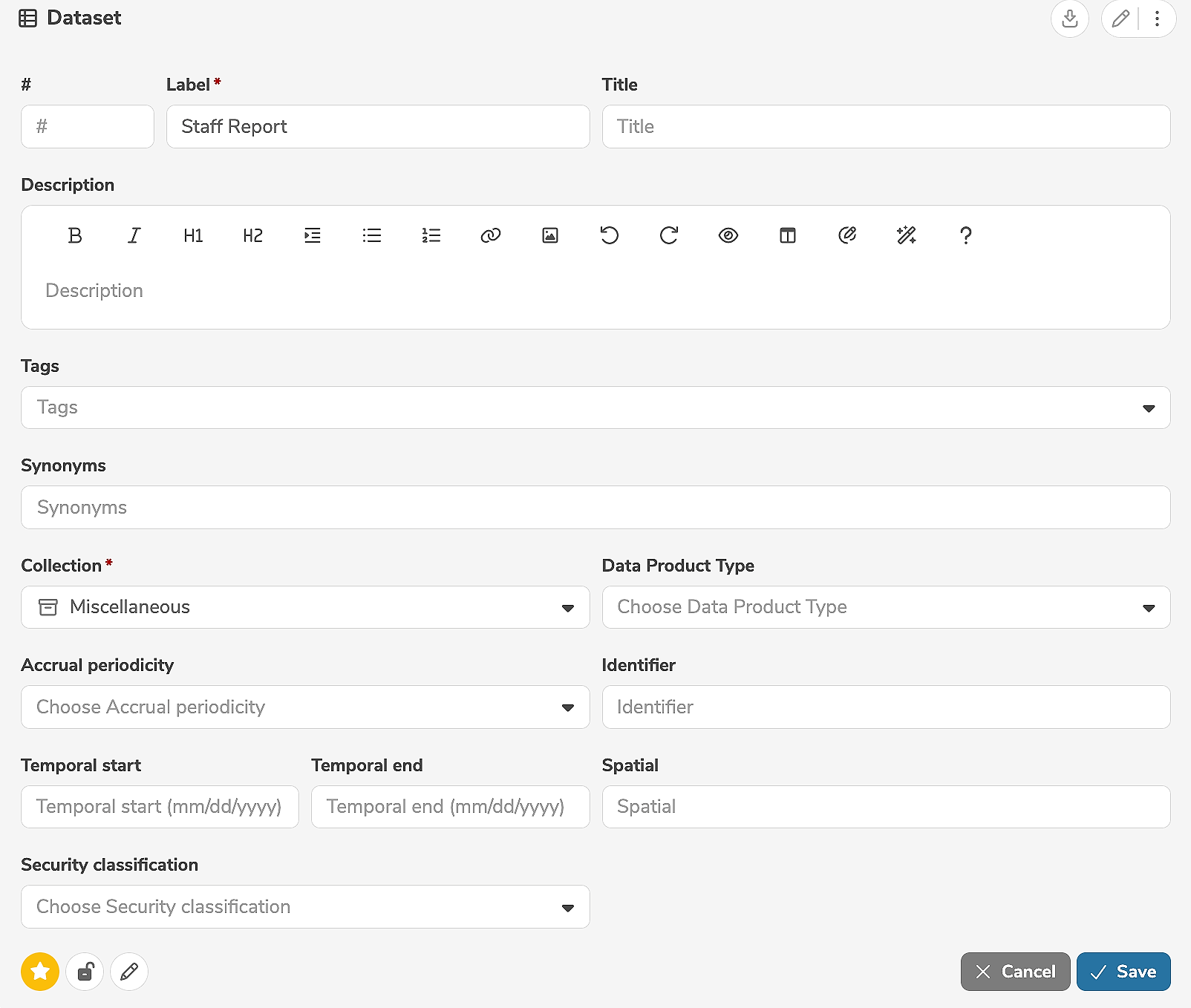
The icons in the lower left corner of the edit view allow further settings to be made:
- Clicking
 marks the element as favorite.
 - Clicking
 marks the element as locked.
 - Clicking
 marks the element as read-only.
Clicking "Save" applies the changes.
A dataset can be deleted in the main panel of the dataset, by selecting "Delete Dataset" in the menu.
Order datasets
The sorting of the datasets is determined by their order (if present). This order can be assigned manually during editing. Alternatively, in the subpanel of the collection, it is possible to arrange the datasets and assign their order automatically.
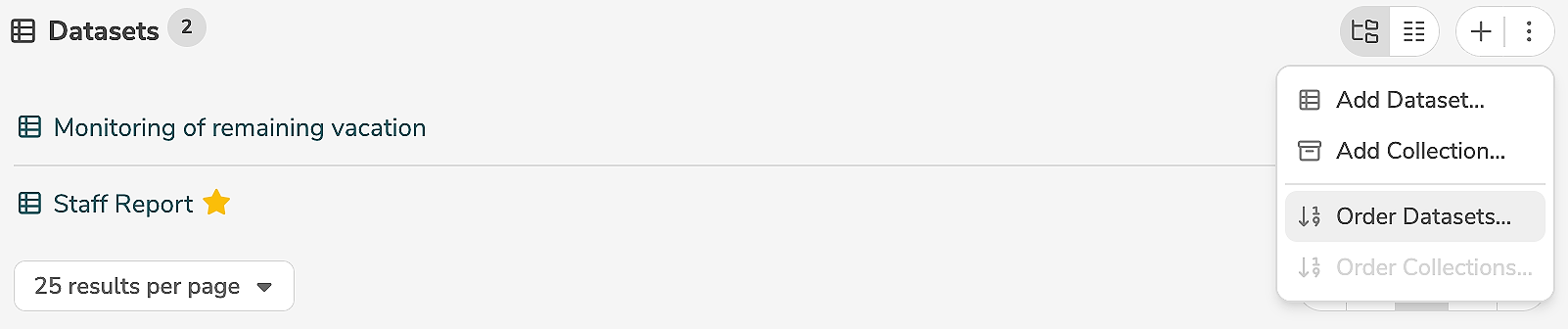
Selecting "Order Datasets..." in the menu opens a dialog, where the datasets can be rearranged with the mouse using "drag and drop".
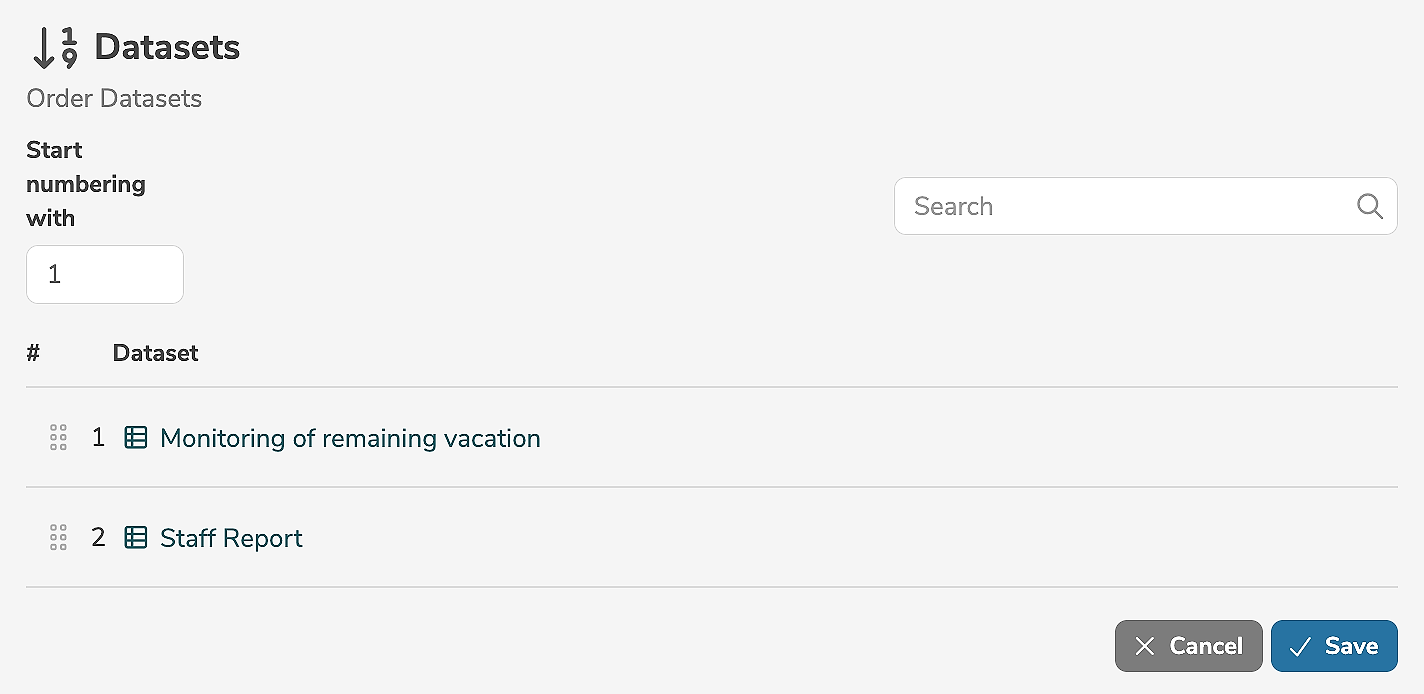
Clicking "Save" applies the changes and reassigns the order automatically.
If required, it is possible to specify that automatic ordering should start at a certain number.
Add subdatasets
Subdatasets are specified in the subpanel of a dataset.
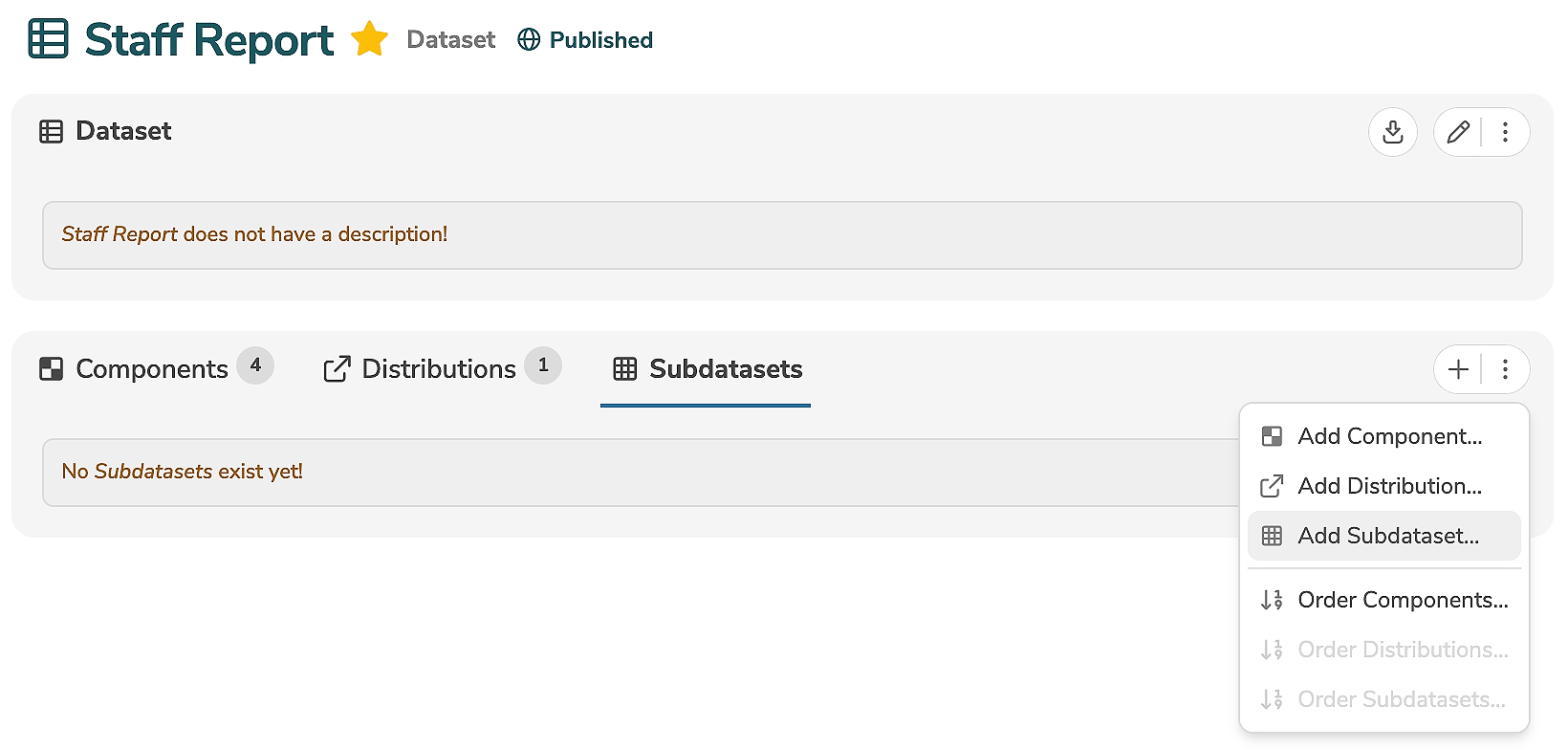
A new subdataset is added by clicking the tab "Subdatasets" and the icon "+" (or by selecting "Add Subdataset..." in the menu).
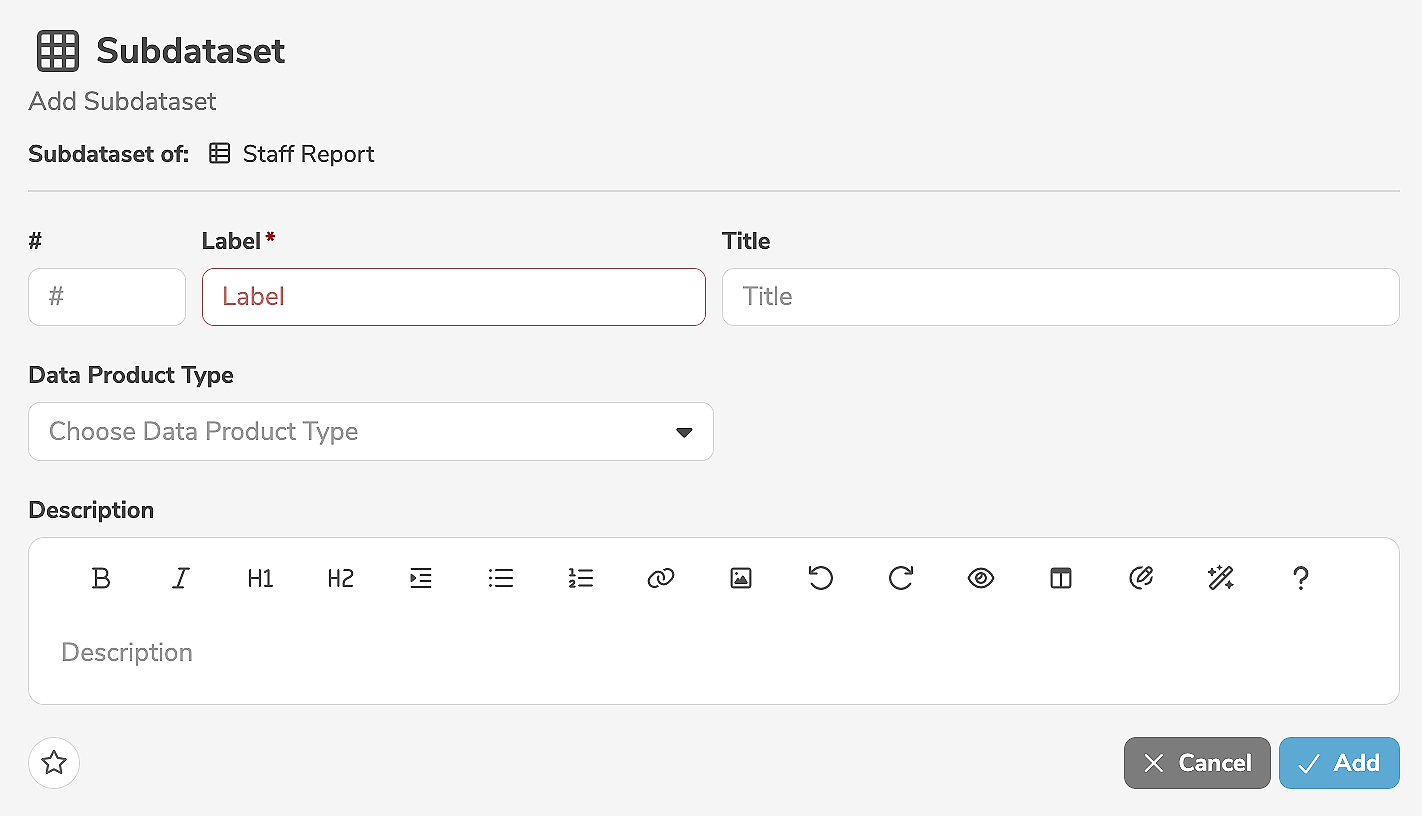
It is mandatory to assign a label to the subdataset. In addition, a title and a description can be specified.
Clicking "Add" creates the subdataset.
Subdatasets can also be created by duplicating other subdatasets.
Edit subdatasets
A subdataset is edited in the main panel of the subdataset, by clicking the edit icon (or by selecting "Edit Subdataset" in the menu).
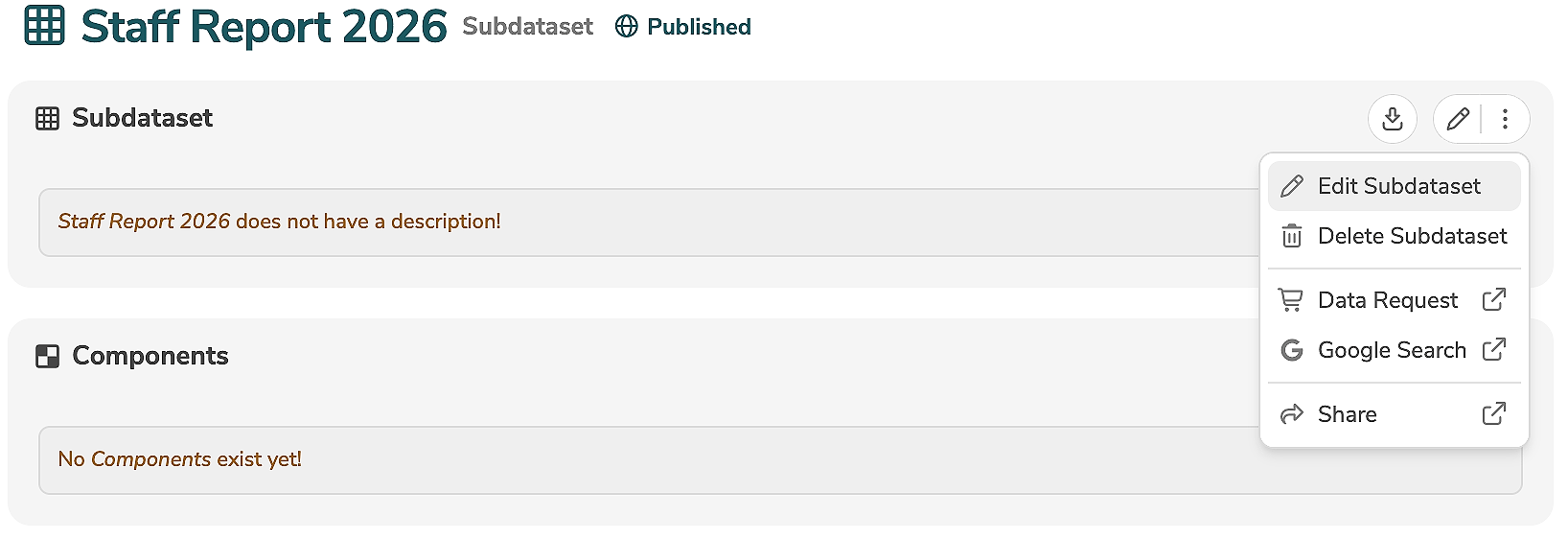
The edit mode allows the modification of all standard input fields. Additional, customer-specific fields can be added using annotations and will then also appear in the edit mode.
A subdataset cannot be subsequently converted to a dataset. Likewise, a dataset cannot be subsequently converted to a subdataset.
The icons in the lower left corner of the edit view allow further settings to be made:
- Clicking marks the element as favorite.
- Clicking marks the element as locked.
- Clicking marks the element as read-only.
Clicking "Save" applies the changes.
A subdataset can be deleted in the main panel of the subdataset, by selecting "Delete Subdataset" in the menu.
Order subdatasets
The sorting of the subdatasets is determined by their order (if present). This order can be assigned manually during editing. Alternatively, in the subpanel of the dataset, it is possible to arrange the subdatasets and assign their order automatically.
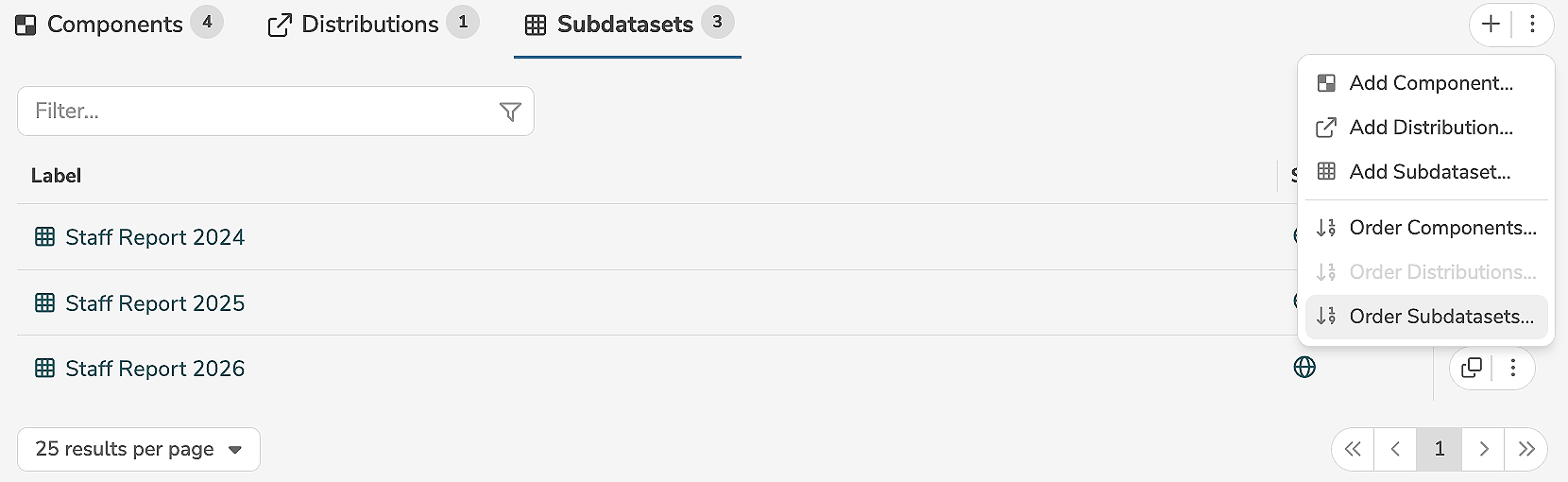
Selecting "Order Subdatasets..." in the menu opens a dialog, where the subdatasets can be rearranged with the mouse using "drag and drop".
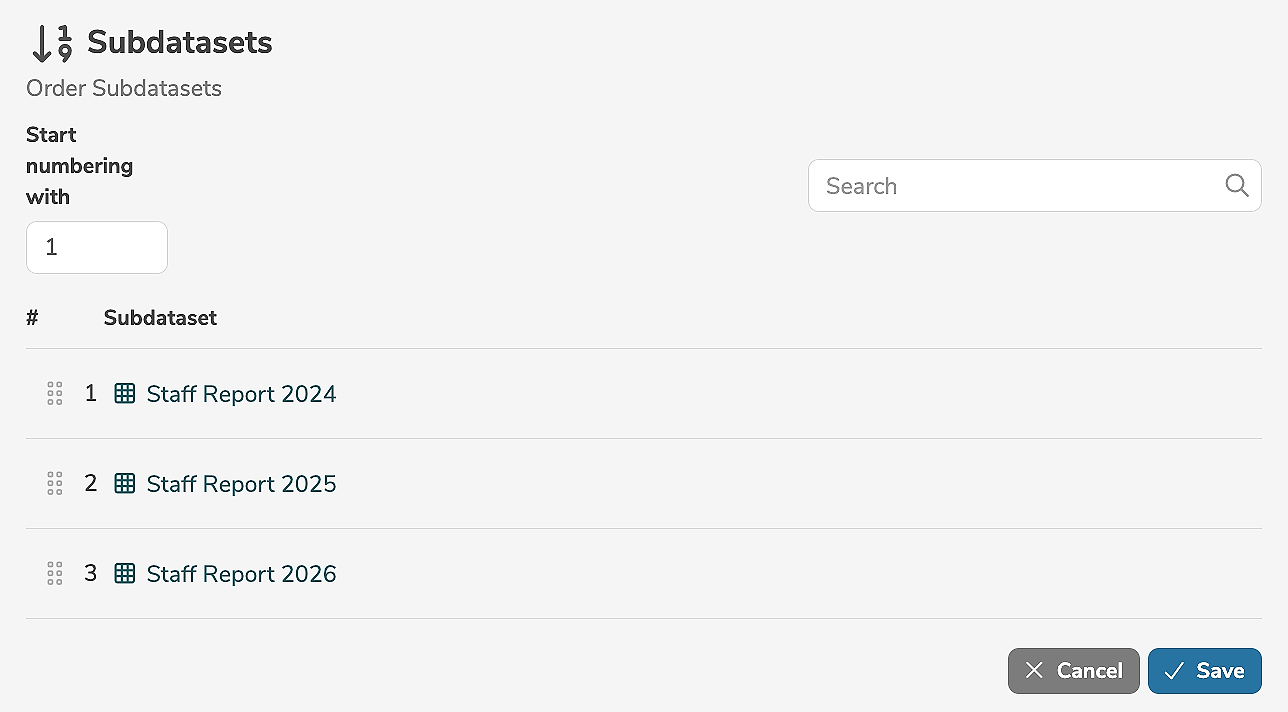
Clicking "Save" applies the changes and reassigns the order automatically.
If required, it is possible to specify that automatic ordering should start at a certain number.