Business objects
Relevant enterprise data is described in terms of business objects and is organized in business data models. Business objects contain attributes as well as relationships to other business objects.
Business objects can inherit attributes and relationships from superordinate business objects.
Add business objects
Business objects are specified in a business data model in the subpanel of a collection.
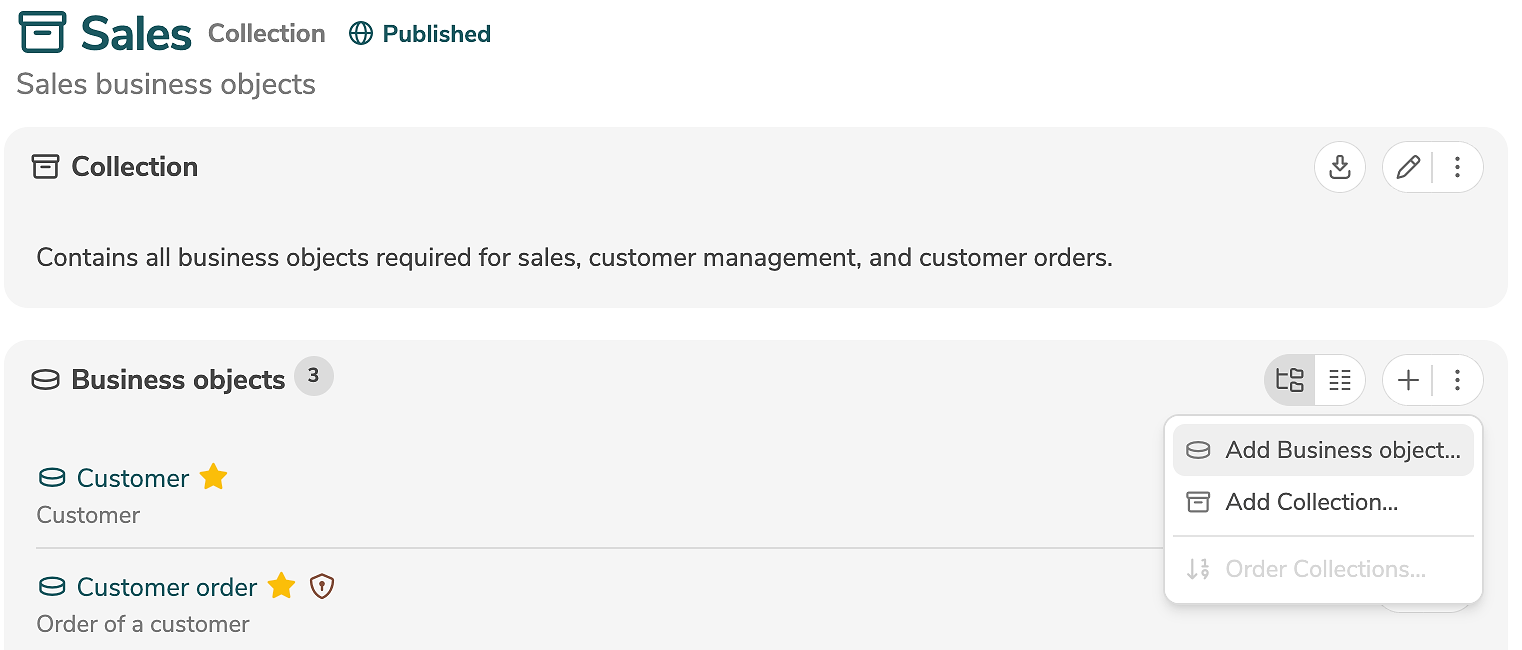
A new business object is added by clicking the icon "+" (or by selecting "Add Business object..." in the menu).
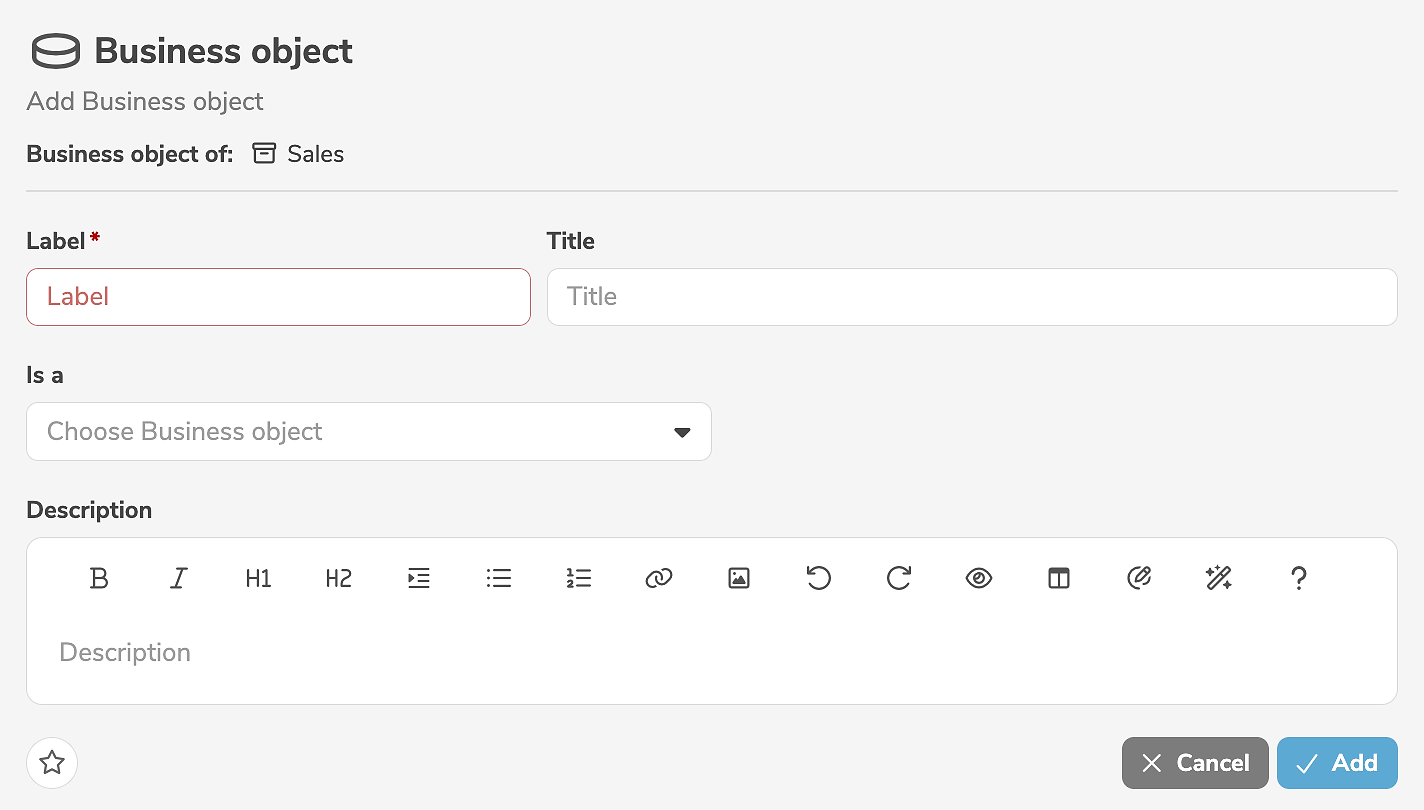
It is mandatory to assign a label to the business object. In addition, a title and a description can be specified. The inheritance ("Is a") from a superordinate business object may be defined, if required.
All attributes and relationships of the superordinate business object are inherited by the subordinate business object. The subordinate business object represents a specialization of the superordinate business object.
Clicking "Add" creates the business object.
Business objects can also be created by duplicating other business objects.
Edit business objects
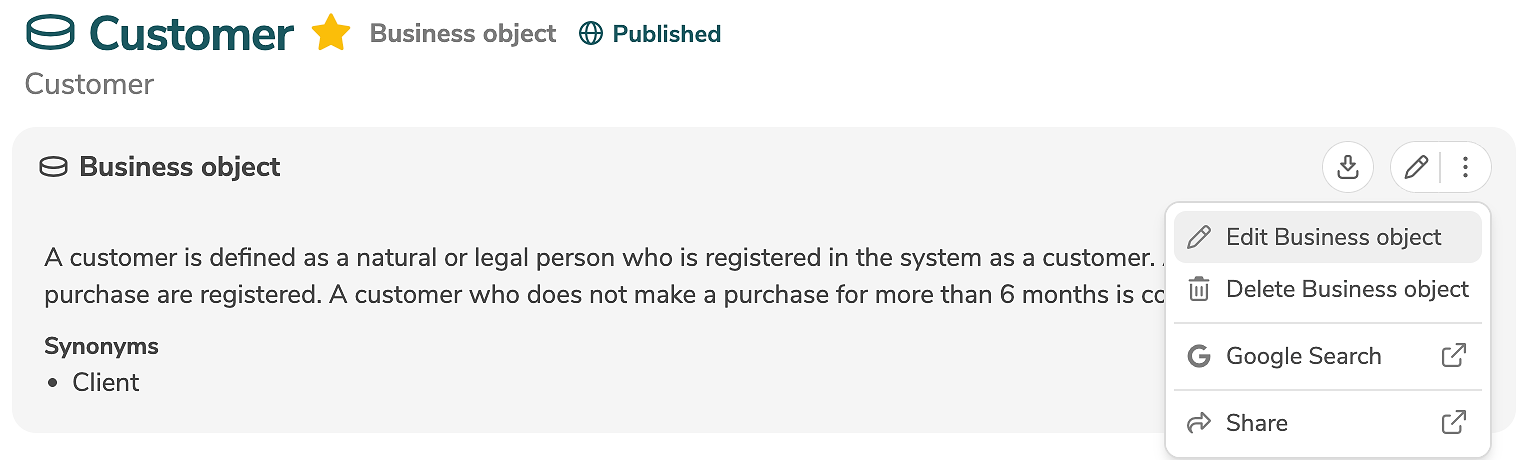
A business object is edited in the main panel of the business object, by clicking the edit icon (or by selecting "Edit Business object" in the menu).
The edit mode allows the modification of all standard input fields. Additional, customer-specific fields can be added using annotations and will then also appear in the edit mode.
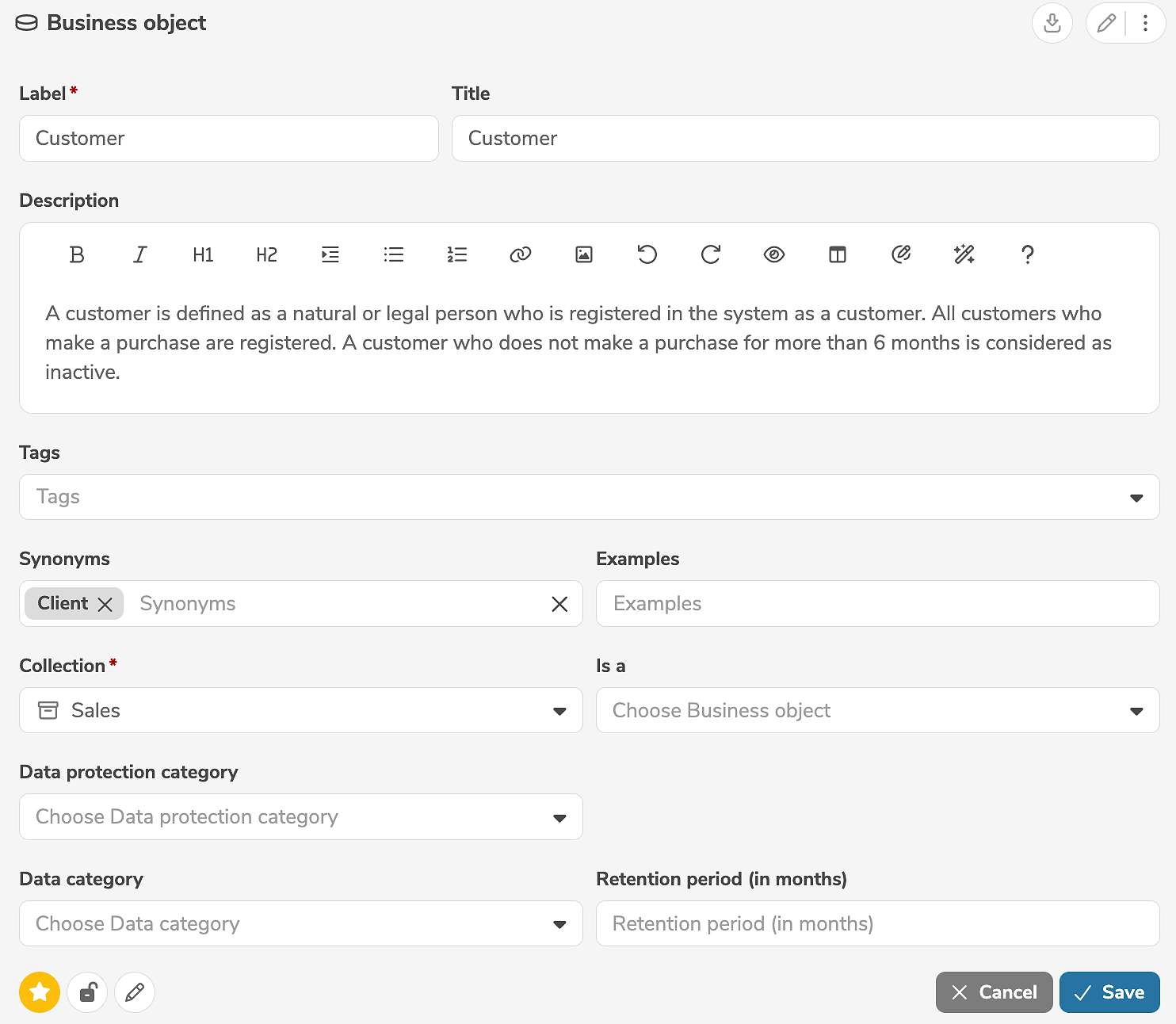
The icons in the lower left corner of the edit view allow further settings to be made:
- Clicking
 marks the element as favorite.
 - Clicking
 marks the element as locked.
 - Clicking
 marks the element as read-only.
Clicking "Save" applies the changes.
A business object can be deleted in the main panel of the business object, by selecting "Delete Business object" in the menu.